NITRILOTRIMETHANEPHOSPHONIC ACID/ATMP / CAS :6419-19-8


Short Description:
Product name:NITRILOTRIMETHANEPHOSPHONIC ACID
Other name:ATMP
Type :ZA-N
CAS: 6419-19-8
MF:C3H12NO9P3
MW: 299.05
STRUCTURE:

specification
| Item | Specification |
| APPEARANCE | WHITE CRYSTAL POWDER |
| ACTIVE CONTENT(as ATMP) % | 95.0 MIN |
| PHOSPHOROUS ACID (as PO33-) % | 3.0 MAX |
| PHOSPHORIC ACID (as PO43-) % | 0.8MAX |
| PH (1%water solution) | 2.0 MAX |
| CHLORIDE (as Cl-)% | 1.0 MAX |
| Fe, mg/L | 20 MAX |
Usage
Chloro-trimethylenephosphonic acid, also known as amino trimethylene phosphonic acid (ATMP), has good chelating, threshold inhibiting and lattice distortion effects. It can prevent scaling salts in water from forming Chemicalbook scale, especially calcium carbonate scale. Amino trimethylene phosphonic acid is chemically stable in water and not easy to hydrolyze. When its concentration in water is high, it has a good corrosion inhibition effect.
ATMP is chemically stable in water and not easy to hydrolyze. When its concentration in water is high, amino trimethylene phosphonic acid has a good corrosion inhibition effect. ATMP is used in circulating cooling water and oilfield reinjection water systems of thermal power plants and refineries. Amino trimethylene phosphonic acid can reduce corrosion and scaling of metal equipment or pipelines. ATMP is used as a metal ion chelating agent in textile printing and dyeing industries, and also as a metal surface treatment agent, etc. The solid form is a crystalline powder, which is easily soluble in water, highly hygroscopic, easy to transport and use, and is especially suitable for cold regions in winter. Due to its high purity, amino trimethylene phosphonic acid (ATMP) can be used as a metal chelating agent and metal surface treatment agent in the textile printing and dyeing industry. ATMP has good chelating, Chemicalbook threshold inhibition and lattice distortion effects. It can prevent scaling salts in water from forming scale, especially calcium carbonate scale. ATMP is chemically stable in water and not easy to hydrolyze. When its concentration in water is high, it has a good corrosion inhibition effect. ATMP is used in circulating cooling water and oilfield reinjection water systems of thermal power plants and refineries. It can reduce corrosion and scaling of metal equipment or pipelines. ATMP is used as a metal ion chelating agent in textile printing and dyeing industries, and also as a metal surface treatment agent, etc. Solid ATMP is a crystalline powder, easily soluble in water, highly hygroscopic, easy to transport and use, and is especially suitable for cold regions in winter. Due to its high purity, it can be used as a metal chelating agent and metal surface treatment agent in the textile printing and dyeing industry.
Aminotrimethylene phosphonic acid (ATMP) in solid form is a crystalline powder, easily soluble in water, highly hygroscopic, and possesses excellent chelating, threshold inhibiting, and lattice distortion properties. It exhibits superior scale inhibition below 200°C, with low toxicity and good thermal stability. In water, it can dissociate into six positive and negative ions and can chelate with various metal ions such as iron, copper, aluminum, zinc, calcium, and magnesium to form stable complexes, showing particularly excellent anti-scaling effects on carbonates. It also has good synergistic effects with polyphosphates, polycarboxylates, and nitrites. It demonstrates good corrosion inhibition at a concentration of 40mg/L according to Chemicalbook. Aminotrimethylene phosphonic acid (ATMP) is a methylene phosphonic acid-type compound, and such compounds are among the earlier agents used in water treatment chemicals. Due to its ability to form double five-membered ring chelates with metal ions like Ca²⁺, Mg²⁺, Zn²⁺, and Fe²⁺ in water, it has good efficacy in inhibiting calcium carbonate scaling and corrosion inhibition performance on carbon steel. ATMP belongs to organic phosphoric acid-based scale inhibitors, which are not easily hydrolyzed and can withstand temperatures above 100°C. They require a relatively low dosage and have good anti-scaling effects.
Packaging and Shipping
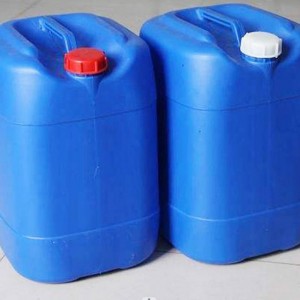
25kg/bag as customer requirements.
Belongs to common goods and can deliver by ocean and air
Keep and storage
Shelf life:24 month from date of manufacture in original unopened packaging stored in a cool dry place out of direct sunlight, water.
Ventilated warehouse, Low temperature drying, Separated from oxidants, acids.